Home / Comparisons / Aluminum vs polycarbonate luggage
Comparison
Aluminum vs polycarbonate luggage
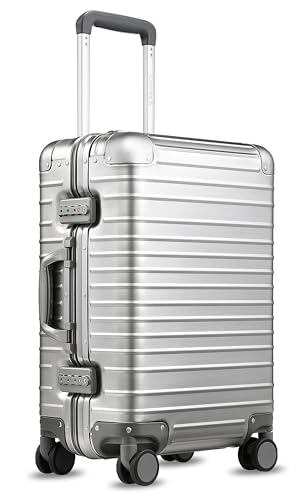 $199.99Check price
 Best polycarbonate
Samsonite Omni PC Hardside Expandable Luggage with Spinner Wheels
22 x 15 x 9.5 in with wheels, 6.13 lb$112.79Check price
| LUGGEX All Aluminum Carry-On | Samsonite Omni PC Hardside Carry-On | |
|---|---|---|
| Price | $199.99 | $112.79 |
| Weight | 9.7 lb | 6.13 lb |
| Listed size, with wheels | 21.7 x 15 x 9.4 in | 22 x 15 x 9.5 in |
| Brand's own size label | 20-inch | 20-inch |
| Shell material | Aluminum | Polycarbonate (PC) |
| Expandable per this listing | Not listed as expandable | Yes, expandable |
| Wheels | Not specified in this listing | Spinner, 4 wheel |
What's the real difference between an aluminum shell and a polycarbonate shell?
Aluminum is a rigid metal panel, usually formed and riveted or bonded into shape, with no flex at all once assembled. Polycarbonate is an engineered plastic molded into a shell that has some give to it, letting it flex slightly and spring back under pressure rather than staying permanently deformed. Both are considered hard shell materials in the with-wheels sense used elsewhere on this site, but they behave differently as materials.
Why is the aluminum case here almost 60% heavier?
As a general material property, metal is simply denser than engineered plastic for the same panel thickness, so an aluminum shell strong enough to hold its shape typically weighs more than a polycarbonate shell built to the same job. That shows up directly in this catalog: the LUGGEX aluminum case weighs 9.7 lb versus 6.13 lb for the Samsonite polycarbonate case, even though both are labeled 20-inch carry-ons with a similar with-wheels footprint.
Which one dents, and which one cracks?
As a general material trait, aluminum tends to dent rather than crack under an impact, since the metal deforms and absorbs the hit without shattering, though a dent is permanent and cosmetic once it happens. Polycarbonate tends to flex under a moderate impact and spring back, but a hard enough or sharp enough hit can crack the plastic outright rather than just leaving a dent. Neither failure mode is universally better, they're just different.
Does a polycarbonate shell mean a cheap suitcase?
Not inherently. Polycarbonate is one of the most common hard shell materials used across price tiers, from budget hardside carry-ons to well-known travel brands, precisely because it's lighter than metal and reasonably impact resistant for its weight. The Samsonite Omni PC in this comparison happens to be a lower-priced listing, but that reflects this specific product's price point, not a rule that all polycarbonate luggage is cheap.
Which should you actually buy?
If a distinctive, rigid metal look and a shell that dents rather than cracks matters to you, and you can accept the extra weight, aluminum is the heavier, pricier option here at $199.99 and 9.7 lb. If you want a lighter case with an expansion feature at a lower price, polycarbonate is the practical choice, shown here by the Samsonite Omni PC at $112.79 and 6.13 lb.
The verdict
Pick aluminum if shell rigidity and a distinctive metal look matter more to you than weight, and you don't mind that a dent is permanent. Pick polycarbonate, like the Samsonite Omni PC here, if you want a lighter case, an expansion feature, and a lower price, and can accept that a hard enough impact can crack the shell rather than just dent it. For most travelers optimizing for airline weight limits, the lighter polycarbonate shell is the easier everyday choice.
Shop both sides
 $48.00Check price
 $109.99Check price
LEVEL8 Carry On Luggage Airline Approved Zipperless Hardside Suitcase Blue
22 x 14.9 x 9 in with wheels, 9.9 lb$239.99Check price $995.00Check price
Frequently asked questions
Is aluminum luggage heavier than polycarbonate luggage?
Generally yes, as a material property, and this catalog shows it directly: the LUGGEX All Aluminum Carry-On weighs 9.7 lb while the Samsonite Omni PC, a polycarbonate shell, weighs 6.13 lb, about 58% less. Metal is simply denser than engineered plastic for a shell built to the same rigidity, which is why aluminum cases tend to eat more of an airline's weight allowance before you've packed anything.
Does aluminum luggage dent easily?
Aluminum can dent under a hard impact since the metal absorbs the hit by deforming rather than cracking, and any dent it takes is permanent and cosmetic rather than something that pops back out. This is a tradeoff, not a flaw: the same deformation that leaves a dent is also what keeps the shell from shattering the way a more brittle material might under the same impact.
Is polycarbonate luggage durable enough for frequent travel?
Polycarbonate is one of the most widely used hard shell materials in luggage at every price tier, from budget carry-ons to well-known travel brands, because it flexes under moderate pressure and springs back rather than staying deformed. It can crack under a sharp or hard enough impact, which is the general tradeoff against a material like aluminum that dents instead.
Which shell material is better for checked bags versus carry-ons?
Both aluminum and polycarbonate are used in carry-on and checked sizes, and the shell material choice comes down to the same tradeoffs either way, weight versus rigidity versus how the shell fails under impact. A checked bag typically takes more handling abuse than a carry-on you keep with you, which is one reason some travelers prefer polycarbonate's lighter weight for a checked bag they won't be carrying themselves.
Researched from published specifications and airline pages, not hands-on testing. Not professional advice.