Home / Comparisons / Travel backpack vs carry-on suitcase
Comparison
Travel backpack vs carry-on suitcase
 $79.99Check price
 Best carry-on suitcase
Travelpro Maxlite 5 Softside Carry-On Luggage Spinner
23 x 14.5 x 9 in with wheels, 5.4 lb$160.00Check price
| tomtoc Travel Backpack 40L | Travelpro Maxlite 5 Softside Spinner | |
|---|---|---|
| Price | $79.99 | $160.00 |
| Empty weight | 2.65 lb | 5.4 lb |
| Listed size, as listed | 20.47 x 12.99 x 9 in | 23 x 14.5 x 9 in (with wheels) |
| Carry method | Worn on your back, hands free | Rolled on 4 spinner wheels |
| Wheels | None | 4-wheel spinner |
| Best terrain | Stairs, cobblestones, running to a gate | Smooth terminal floors, heavier packing loads |
What do you give up by choosing a backpack over a wheeled suitcase?
You give up the ability to roll dead weight instead of carrying it. A wheeled suitcase like the Travelpro Maxlite 5 lets you push or pull 5.4 lb of empty case, plus everything you pack, without any of that weight sitting on your shoulders. A backpack puts all of it on your back and hips instead, which is lighter to start (2.65 lb empty versus 5.4 lb) but adds up fast once it's packed full.
Which one actually holds more?
The tomtoc backpack is built and marketed around a 40 liter capacity, per its own listing name. The catalog does not list a liter capacity for the Travelpro Maxlite 5 softside carry-on, only its listed footprint of 23 x 14.5 x 9 in with wheels, so a direct liter-for-liter comparison isn't possible from these two listings. In practice, a hardsided or structured softside suitcase tends to use its interior box shape more efficiently for folded clothes, while a backpack's compartments are shaped around your body rather than a flat interior.
Which is easier on your body over a full travel day?
A wheeled suitcase does the carrying for you on flat ground, which is easier on your shoulders and back over a long terminal walk. A backpack keeps both hands free, which matters on stairs, escalators, cobblestone streets, or any time you need to move fast without stopping to lift a case, but that convenience comes at the cost of the weight sitting directly on you the whole time, not on wheels.
Which handles rough treatment better?
As a general material property rather than a testing claim: a backpack has no wheels or extending handle mechanism to break, which are common failure points on wheeled luggage after repeated drops or rough baggage handling. A wheeled suitcase's shell and frame, on the other hand, generally protects packed contents from crushing better than a soft backpack does, since the backpack has less rigid structure.
Who should pick a backpack over a wheeled carry-on?
Anyone doing a lot of walking on uneven ground, hopping between trains, or moving through cities without elevators benefits from having both hands free and nothing to drag over curbs. Anyone checking in at an airport with smooth floors and moving walkways, or packing heavier for a longer trip, generally does better letting a wheeled case carry the weight instead.
The verdict
Choose the tomtoc-style travel backpack if your trip involves stairs, uneven streets, or a lot of walking without wheels to help, and you're willing to carry the weight on your back. Choose the Travelpro-style wheeled carry-on if you'll mostly move through airports and hotels with flat floors, want to pack heavier, or simply don't want the load on your shoulders. Neither is a wrong answer, they solve different problems.
Shop both sides

LOVEVOOK 40L Travel Backpack Flight Approved Carry on Backpack,3 Packing
18 x 14 x 8 in as listed$43.99Check price
SwissGear Sion Carry-On Spinner Luggage
22.75 x 14.25 x 10.25 in with wheels, 8.8 lb$130.00Check price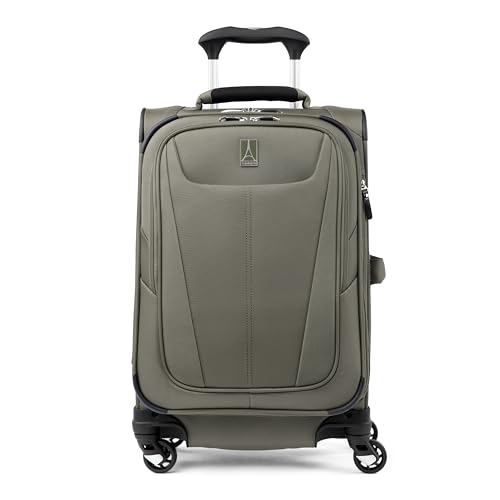
Travelpro Maxlite 5 Softside Carry-On Luggage Spinner
22 x 14 x 9 in with wheels, 5.1 lb$160.00Check price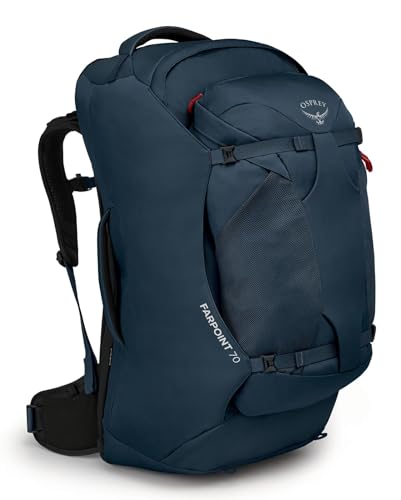 $275.00Check price
Frequently asked questions
Is a travel backpack lighter than a wheeled carry-on suitcase?
Usually yes, empty. The tomtoc Travel Backpack 40L weighs 2.65 lb while the Travelpro Maxlite 5 Softside Spinner weighs 5.4 lb, largely because the suitcase carries a wheel and handle mechanism the backpack does not need. Once both are packed full, the weight difference matters less since you're carrying the backpack's full weight on your body either way.
Can a travel backpack count as a carry-on instead of a personal item?
It depends entirely on its size against your airline's carry-on limit, not on the fact that it's a backpack. A backpack built to roughly 20.5 x 13 x 9 in, like the tomtoc above, fits within most US carry-on limits around 22 x 14 x 9 in and can be used as your carry-on rather than a personal item.
Do travel backpacks fit as much as a carry-on suitcase?
It depends on the specific bag. A backpack marketed at 40 liters is built around that stated capacity, but its interior is shaped around a person's back rather than a flat box, so packing efficiency varies more than with a structured suitcase. Neither style has a universal capacity advantage over the other.
Which is better for a trip with a lot of stairs and cobblestones?
A travel backpack, since it keeps both hands free and nothing drags or catches on uneven ground. A wheeled carry-on has to be lifted up stairs and dragged over cobblestones, which is harder on both the case and the person pulling it than simply wearing a backpack through the same terrain.
Researched from published specifications and airline pages, not hands-on testing. Not professional advice.